Indigenous Peoples Strategy 2026–2030

Project Type

graphic design

Client

woodside energy

Brief

Woodside Energy required a refreshed and a more innovative design of their Indigenous Peoples Strategy 2026–2030 that will resonate with their diverse audiences and internal stakeholders.

Design

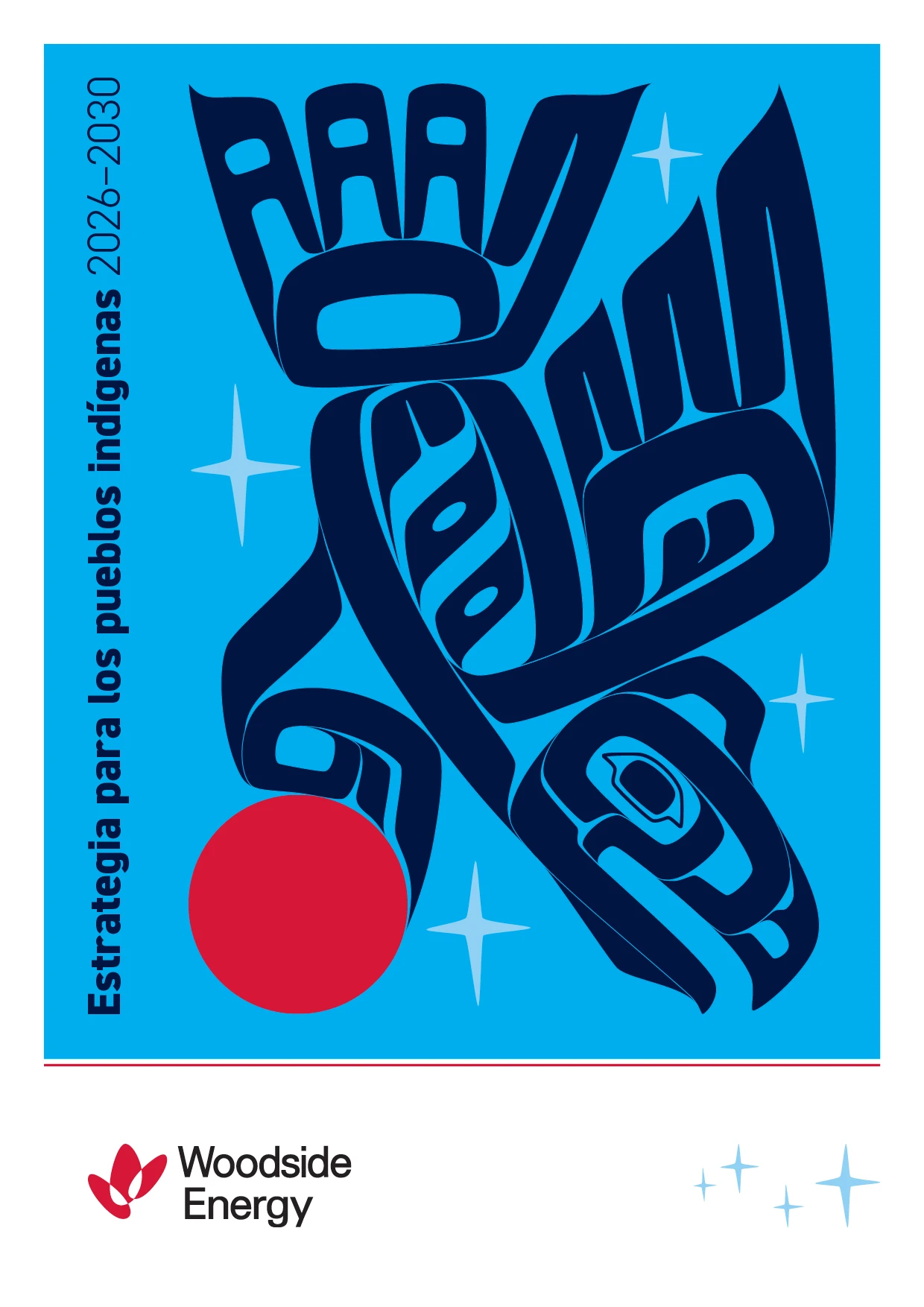
The design of Woodside’s Indigenous Peoples Strategy 2026–2030 was guided by the themes of Connection and Illumination, using storytelling as a guiding principle to create a meaningful and engaging visual narrative.  

Connection

Globally, Indigenous Peoples share a deep connection to Country – a living presence that shapes their identity, culture and creative expression through art, stories and knowledge passed between generations. Connection is at the heart of Woodside Energy – connection to place, to people and to each other. Strong relationships are extremely important for responsible, sustainable and long-term business success. Together, they demonstrate that connection is a guiding light that strengthens relationships through mutual respect and a commitment to helping people lead better lives.

Illumination

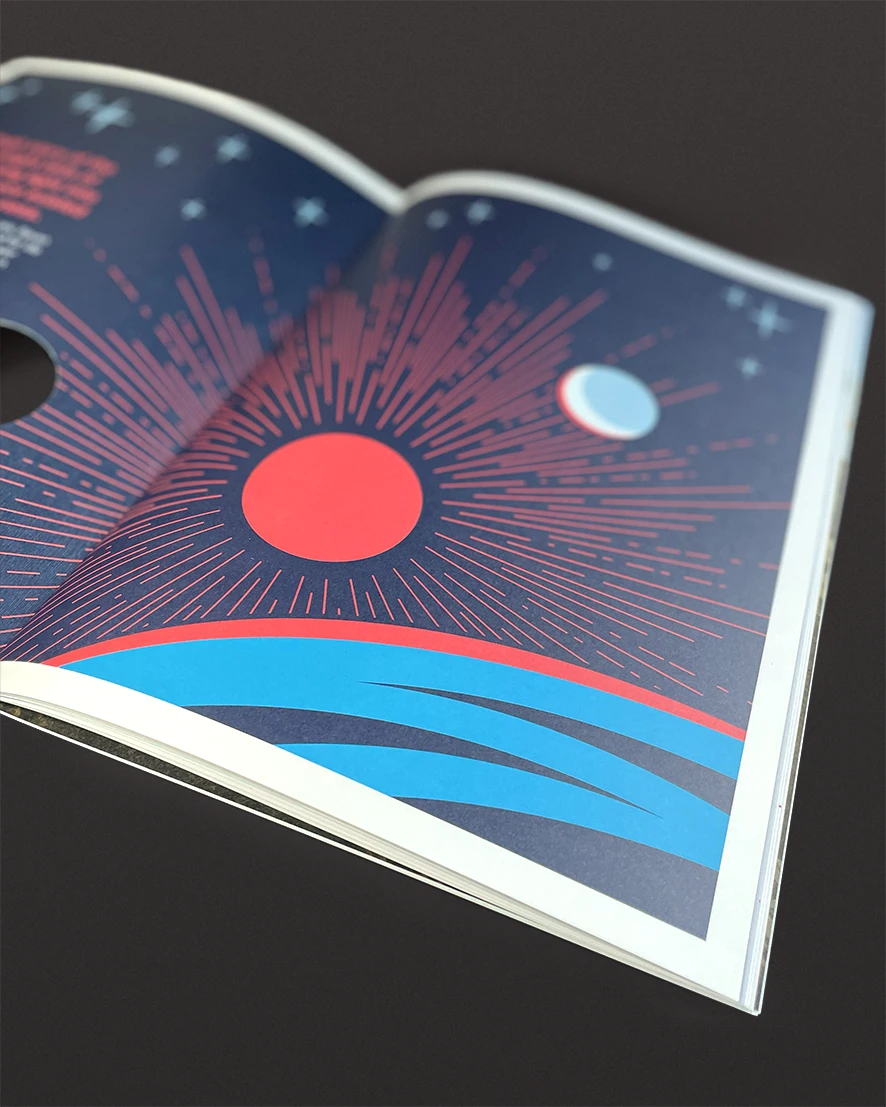
There is a parallel between Woodside Energy and Crystal Worl’s artwork The Tlingit story of the Box of Daylight that I wanted to shine through the strategy layout – the concept of providing light, warmth and energy essential to human life.

Print Production

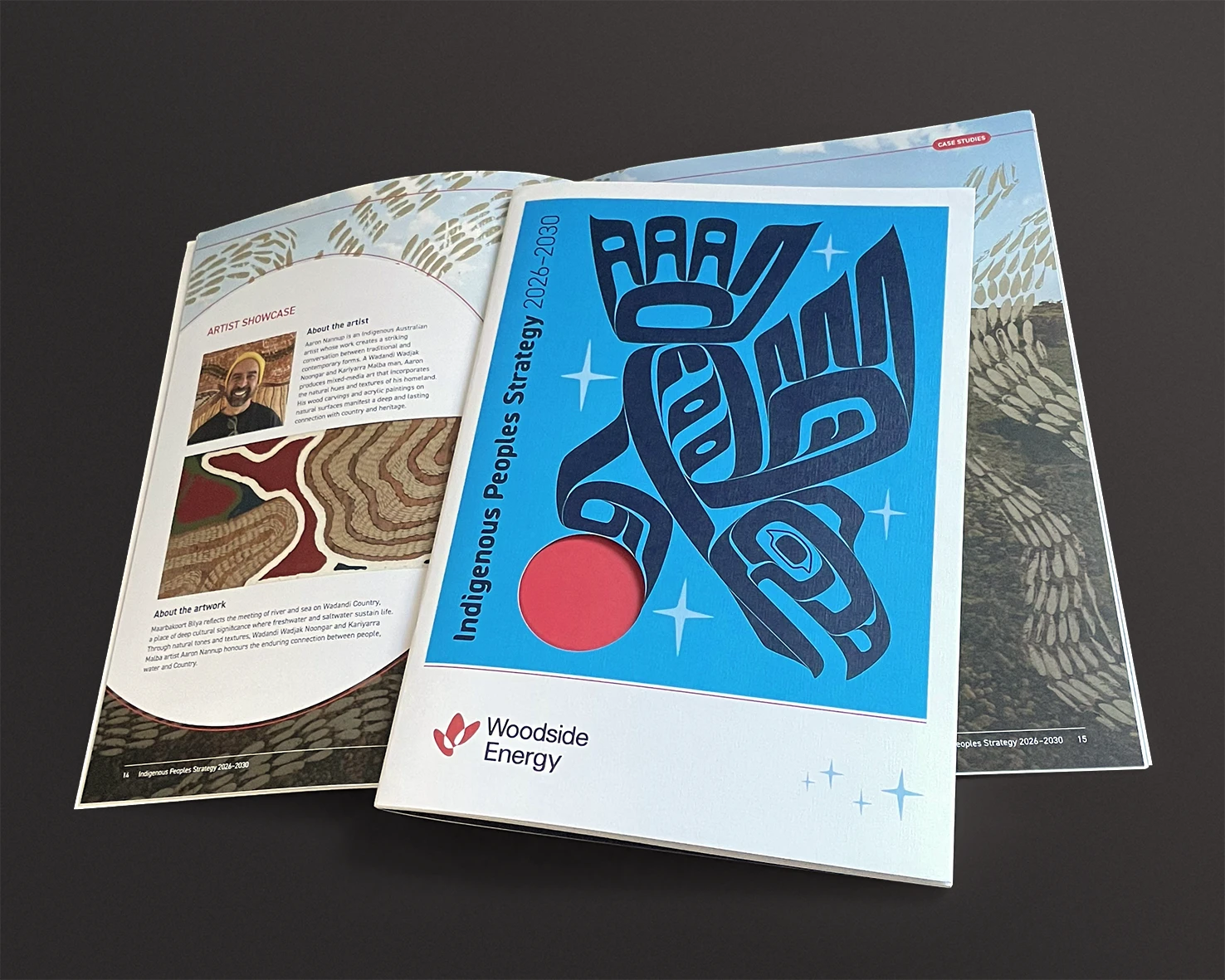
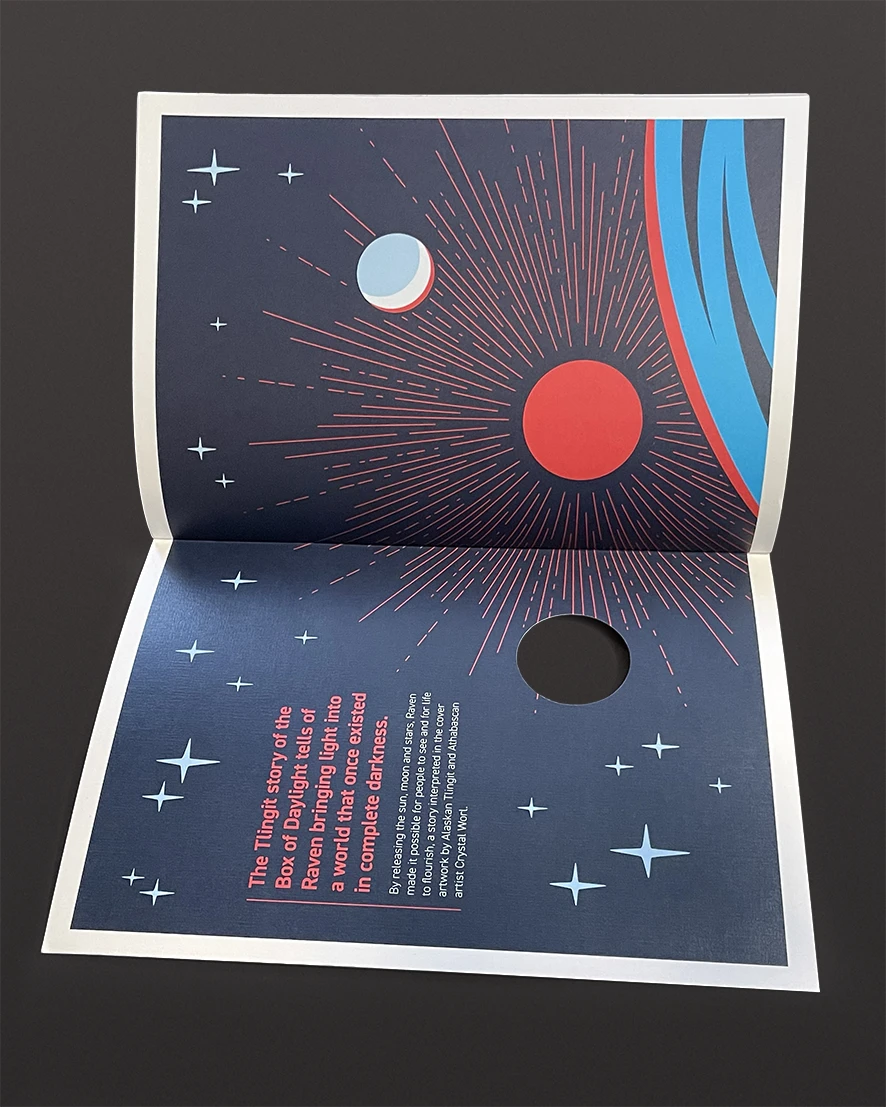
The strategy was printed locally on textured paper inspired by the paper substrates used by Indigenous artists, adding another meaningful layer to the overall design. The circular diecut introduces the artwork on the following page spread which serves as an extension to the story of the Raven releasing the sun, moon and the stars to the world. Producing the strategy in two additional languages makes this important document more accessible to a wider audience and helps its key messages reach more communities.
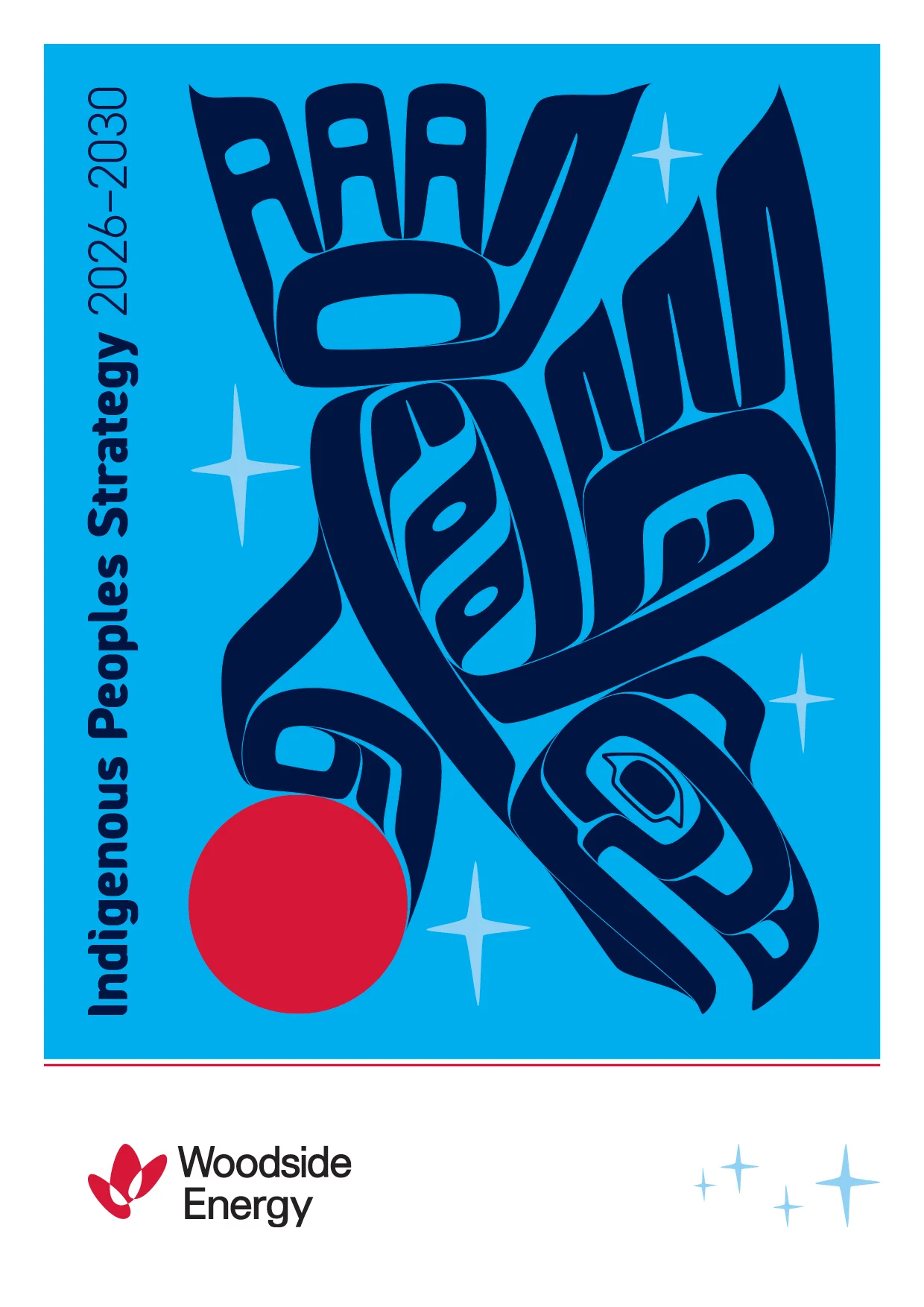
A booklet titled 'Indigenous Peoples Strategy 2026-2030' with blue Indigenous-style artwork on the cover and the Woodside Energy logo at the bottom, resting on an open double-page spread featuring an artist showcase section with a photo and artwork description.
Open booklet with a dark blue background featuring a graphic of a large red sun with radiating lines, a blue and white crescent moon, and scattered light blue stars. Text in red reads, "The Tingit story of the Box of Daylight tells of Raven bringing light into a world that once existed in complete darkness." Additional smaller white text explains the story and credits artwork by Alaskan Tlingit and Athabascan artist Crystal Worl. The right page has a circular cutout.An open book showing an abstract illustration of a red sun with radiating lines, a stylised blue and red Earth, a light blue moon, and light blue stars on a dark blue background.
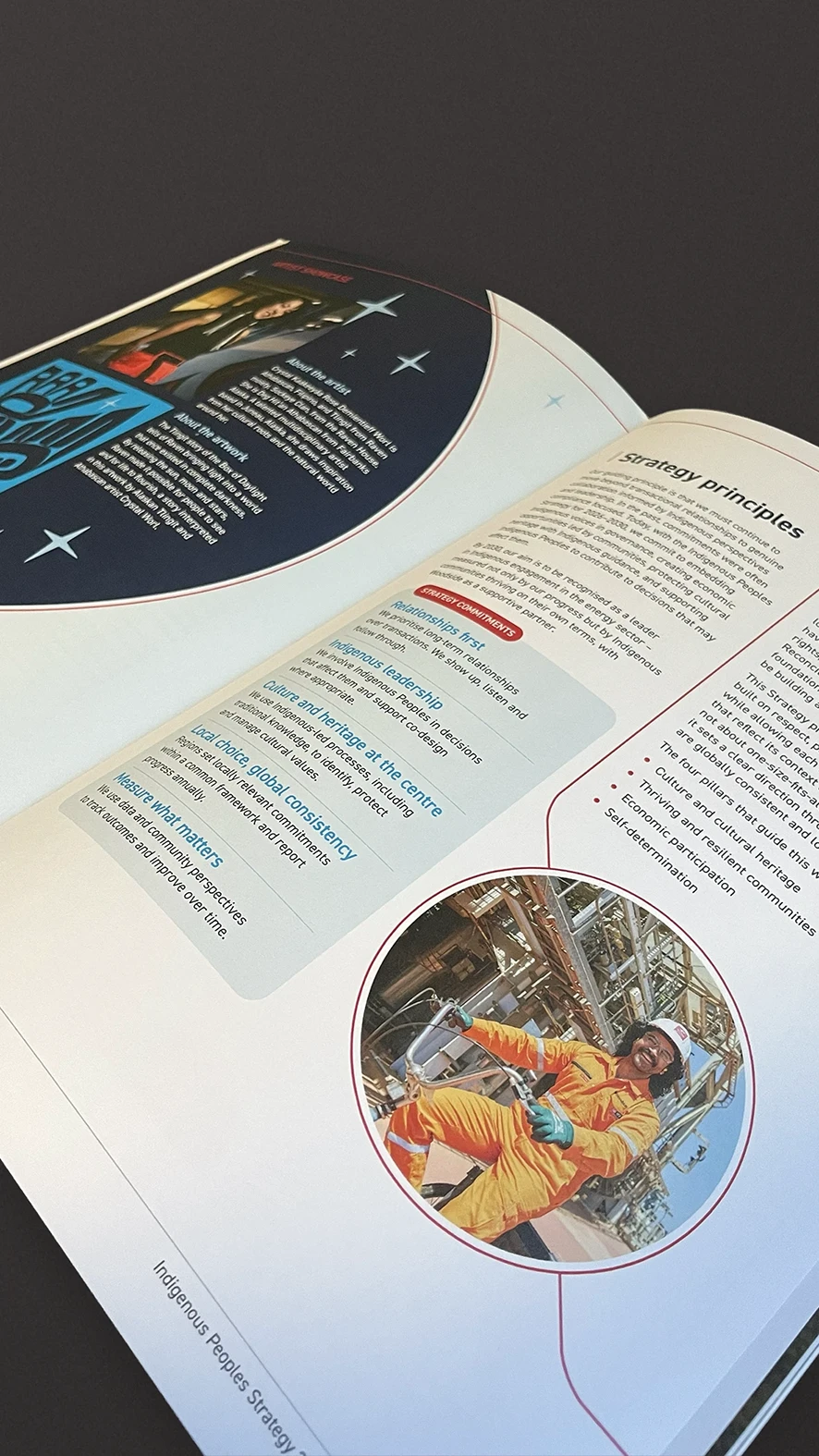
Close-up of a folded brochure titled 'Indigenous Peoples Strategy 2022–2027' with blue and red graphics and the Woodside Energy logo at the bottom.Open booklet showing a page titled 'Strategy principles' with bullet points and a red section labeled 'Strategy commitments' listing topics like relationships first, Indigenous leadership, culture and heritage, local choice, global consistency, and measuring what matters. There is a circular photo of a smiling worker in an orange safety outfit and white helmet holding equipment at an industrial site.
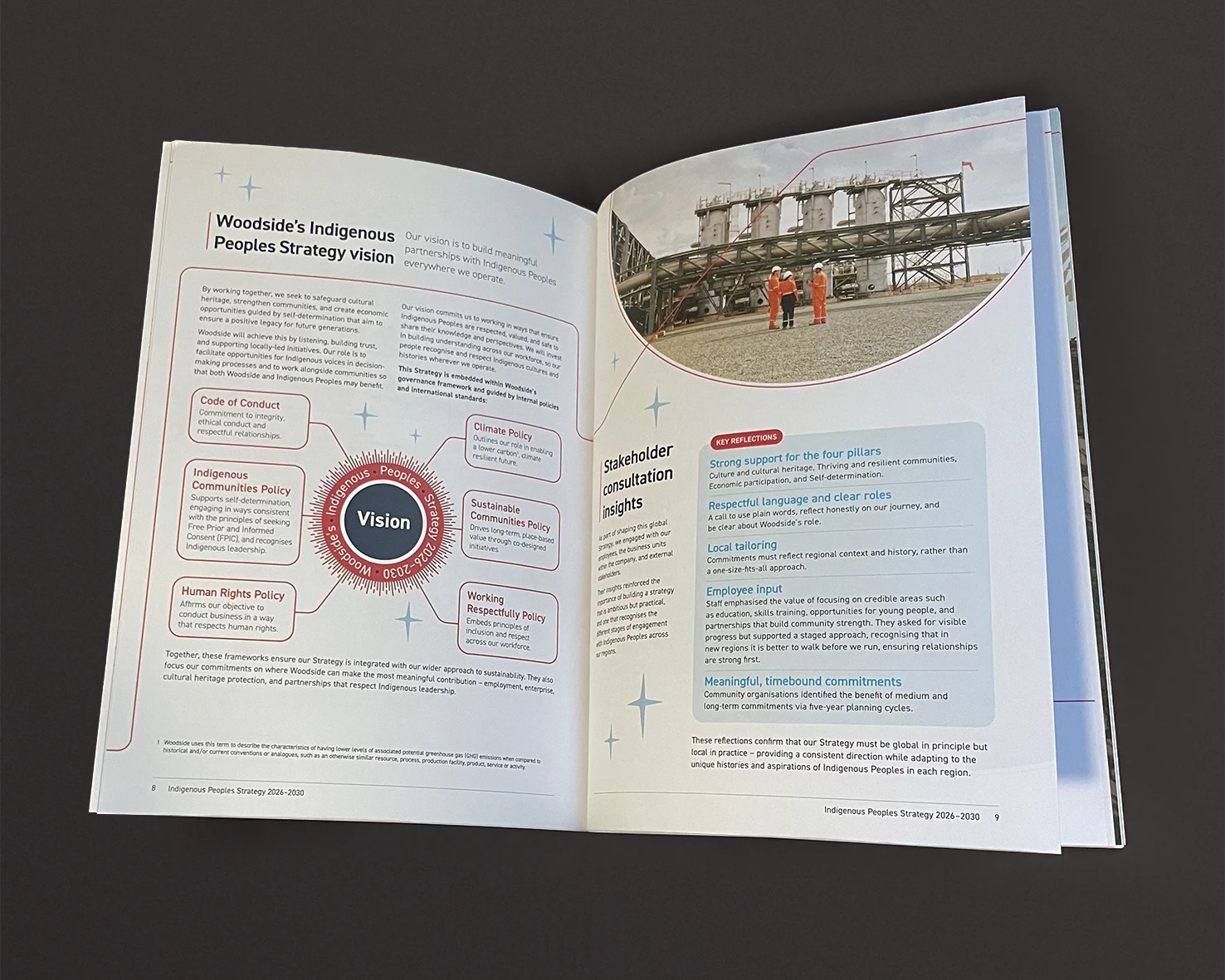
An open book displaying Woodside's Indigenous Peoples Strategy 2026–2030 with text, diagrams, and a photo of three people in orange safety gear standing by an industrial facility. The left page highlights the strategy's vision and policies including Code of Conduct, Indigenous Communities Policy, Human Rights Policy, Climate Policy, Sustainable Communities Policy, and Working Respectfully Policy. The right page shows stakeholder consultation insights emphasizing support for the four pillars, respectful language, local tailoring, employee input, and meaningful timebound commitments.
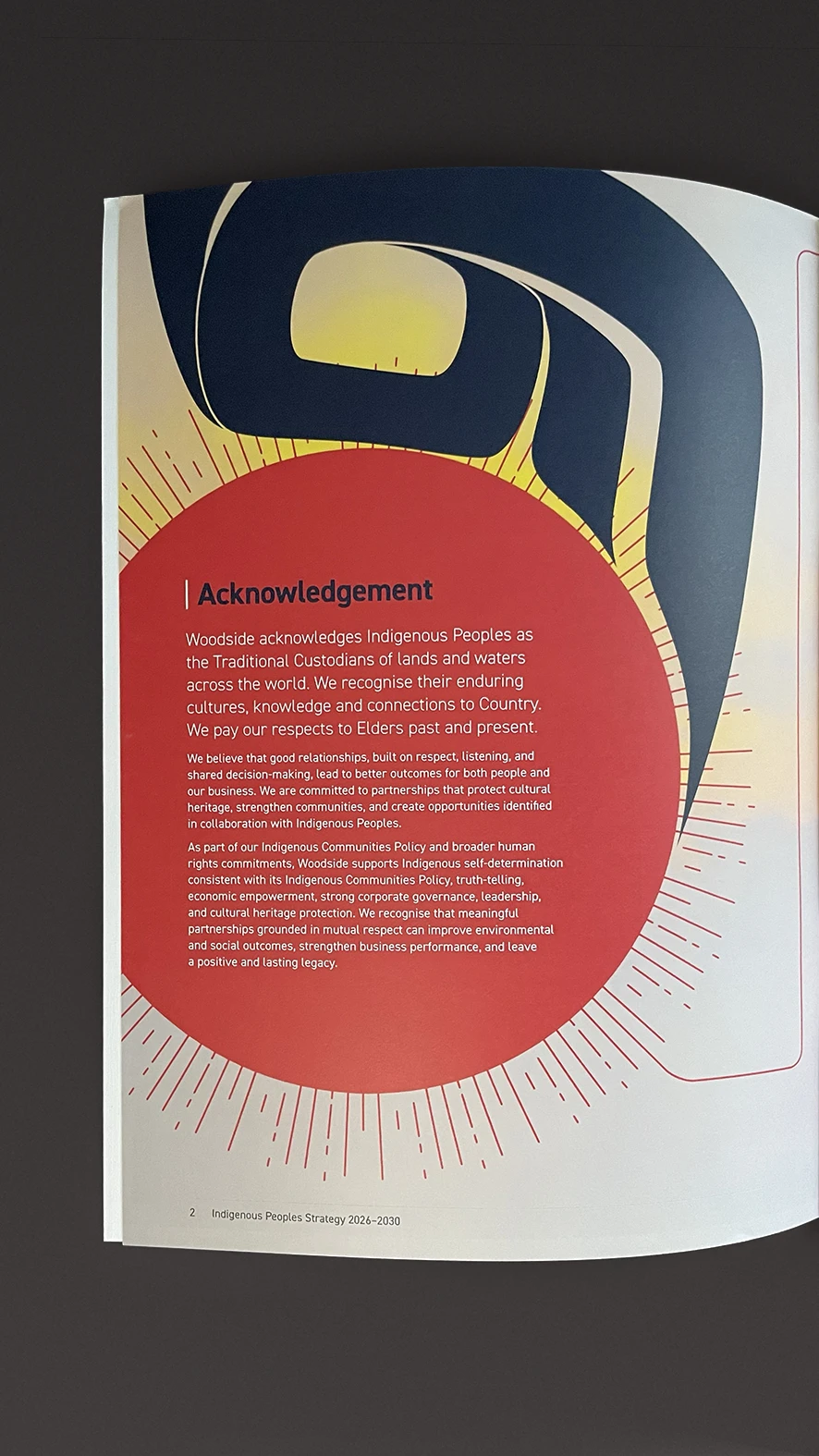
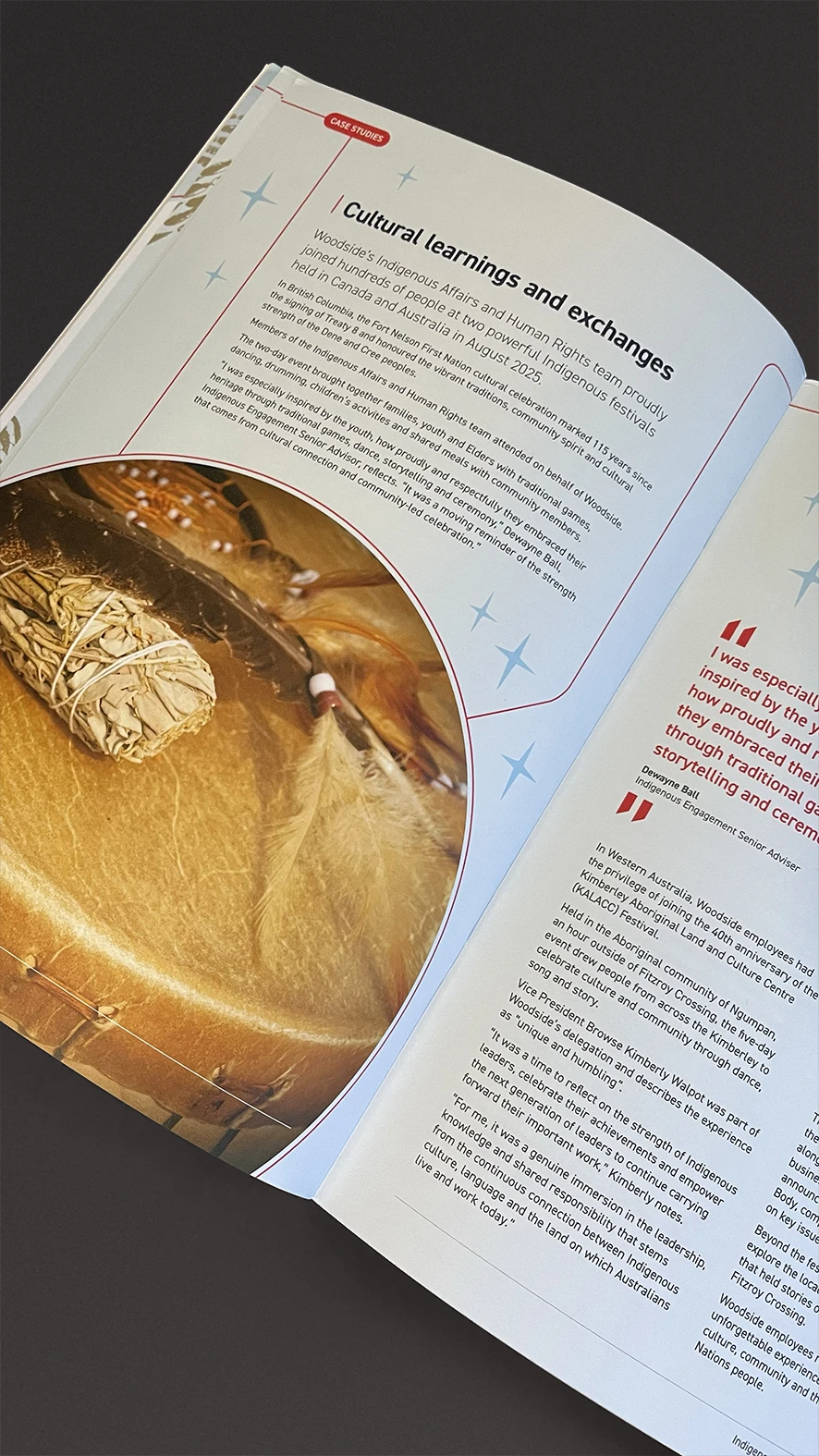
Page from a document titled 'Acknowledgement' featuring a large red circle with text inside recognizing Indigenous Peoples as Traditional Custodians of lands and waters, respecting their cultures and Elders. The text emphasizes good relationships based on respect, shared decision-making, and support for Indigenous self-determination, cultural heritage protection, and partnerships for social and environmental outcomes. The page includes Indigenous-style abstract artwork with dark and yellow shapes above the circle. The footer notes 'Indigenous Peoples Strategy 2026–2030.'Open magazine spread featuring a case study titled 'Cultural learnings and exchanges' about Woodside's Indigenous Affairs and Human Rights team celebrating Indigenous festivals in Canada and Australia in August 2025. The left page has a circular photo of a traditional item with dried sage wrapped in string and feathers on a tan surface. The text details the event, participation from Indigenous communities, and quotes about cultural heritage and connection.
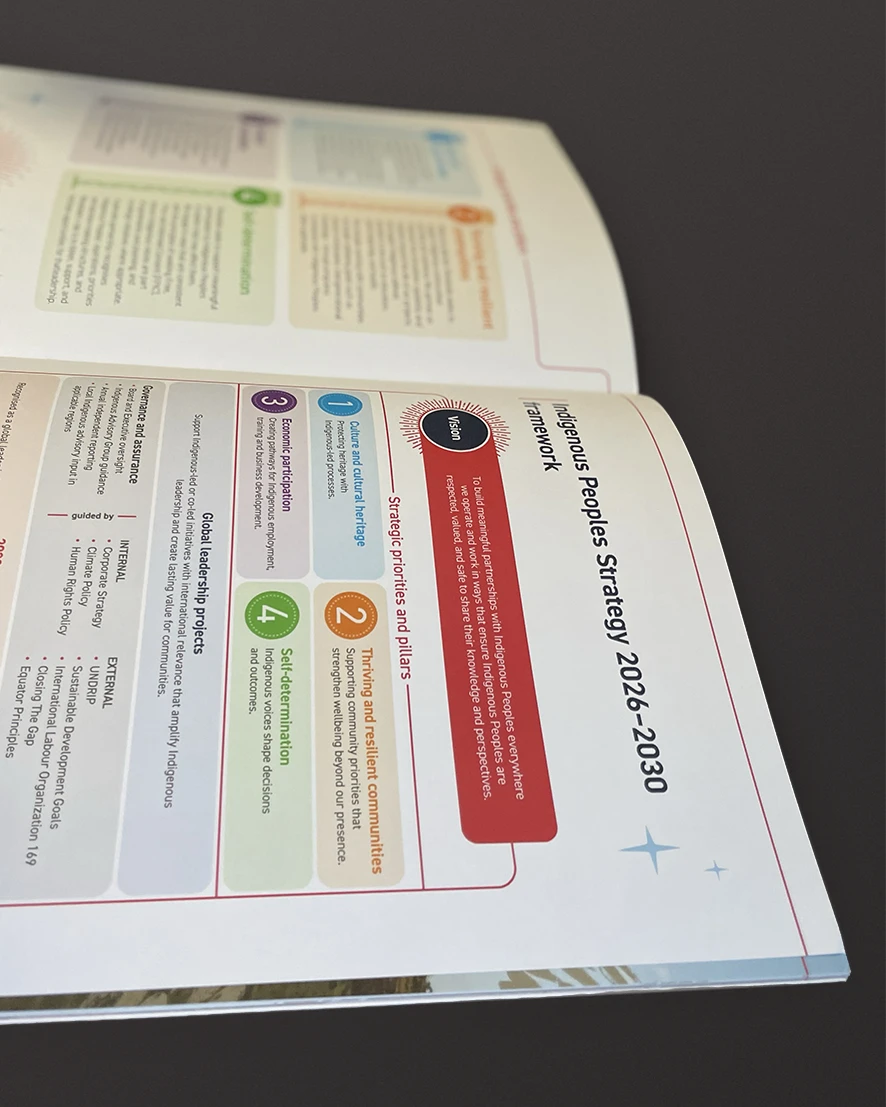
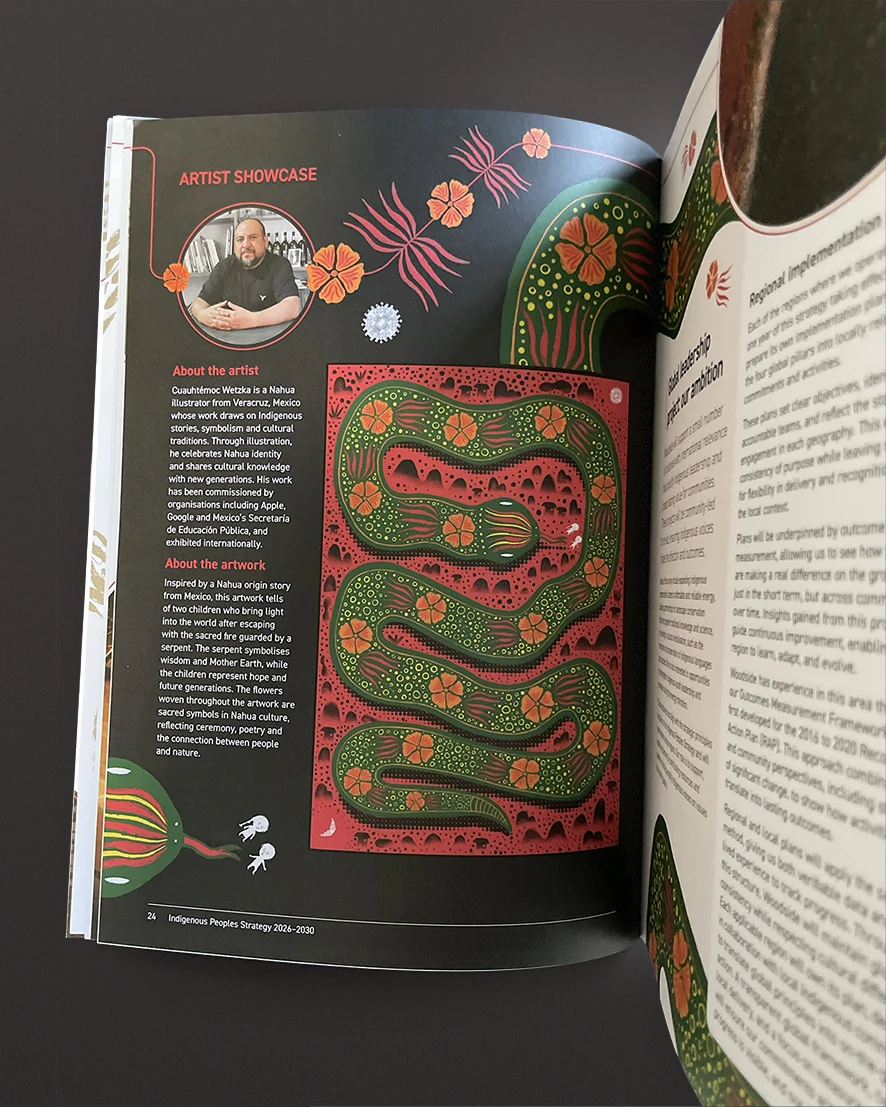
Open book page showing the Indigenous Peoples Strategy 2026-2030 framework with vision and four strategic priorities: 1 Culture and cultural heritage, 2 Thriving and resilient communities, 3 Economic participation, 4 Self-determination, along with governance and leadership projects.Open magazine spread featuring an Artist Showcase with a circular portrait of Cuauhtémoc Wetzka, a Nahua illustrator from Veracruz, Mexico, and his artwork of a green serpent decorated with orange flowers and dots on a red background, inspired by a Nahua origin story about two children and a sacred fire guarded by the serpent.
Back to top